

The 7th OECD World Forum on Well-being – Strengthening Well-being Approaches for a Changing World
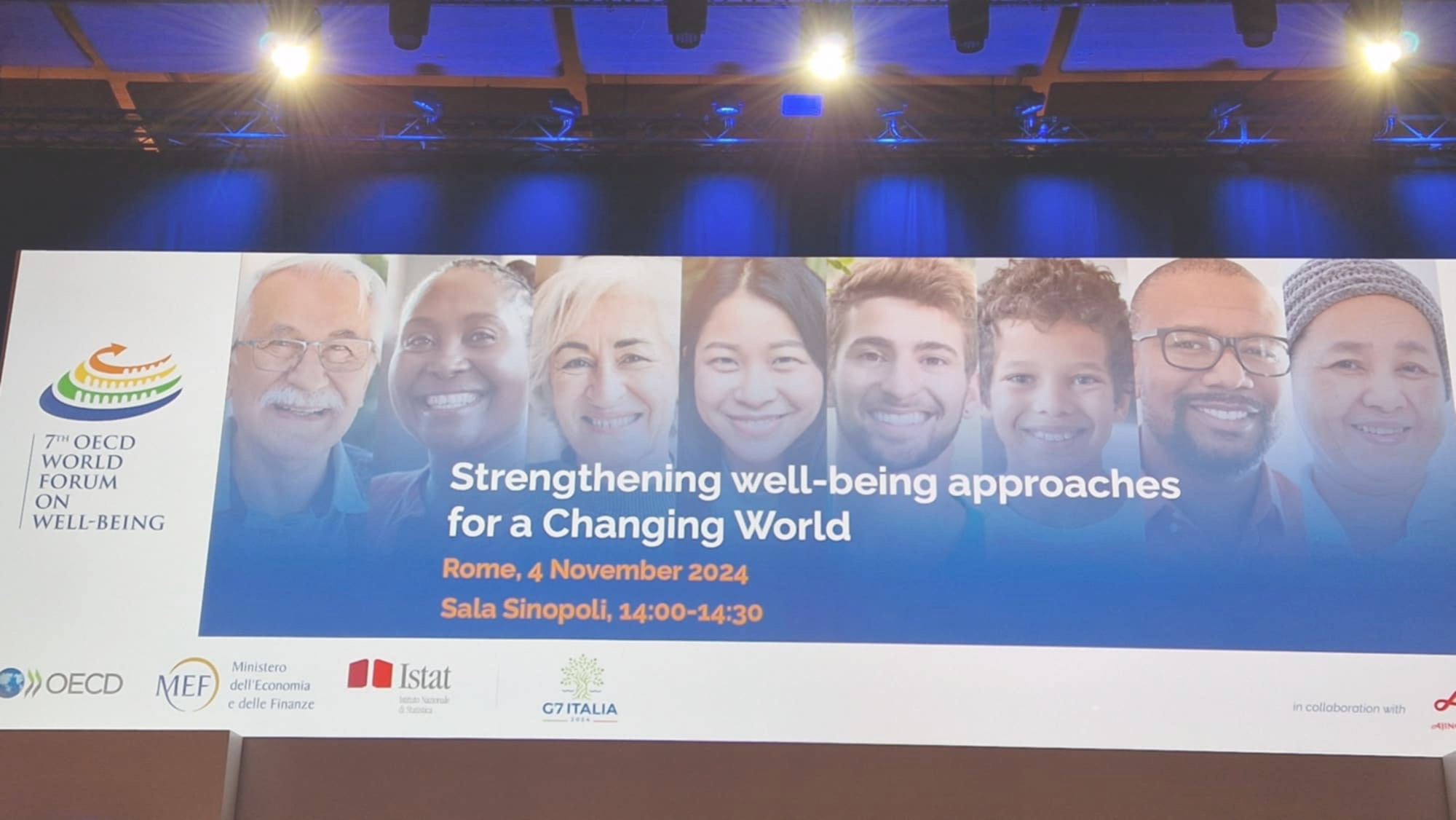
On 4–6 November, Dr Jūratė Petrauskienė, Director General of the State Data Agency (Statistics Lithuania), and Dr Inga Masiulaitytė-Šukevič, Deputy Director General, participated in the 7th OECD World Forum on Well-being held in Rome.
The 7th edition of the Forum was entitled Strengthening Well-being Approaches for a Changing World.
The aim of the Forum was to emphasise the need to centre people’s well-being across all areas of public policy and all forms of societal action to successfully navigate the complex transitions facing today’s economies and societies. Climate change, demographic shifts, and technological innovation are just some of the major transformations shaping every aspect of the way people live, and the way governments, businesses and other organisations operate.
OECD Secretary-General Mathias Cormann opened the Forum, insights and objectives were presented by the President of the Italian National Institute of Statistics and the Minister of Economy and Finance (Italy).
The Forum highlighted the need of decision-making to take into account a complex interplay of economic, social and environmental factors, both in the short-term and the long-term, while reducing negative impacts on inequalities and vulnerable groups. Well-being approaches, which are grounded in multidimensional, people-focused evidence and frameworks, help provide a more systemic and comprehensive view of what matters for people’s lives today and into the future. They transcend policy silos and narrow sectoral perspectives, fostering more joined-up ways of thinking, and more collaborative solutions across governments and across societies.
Parallel sessions focused on integrating the value of nature, people, society and future well-being in business decision-making, disruptive paths to social innovation, building well-being for people and planet as well as the role of public and private partnerships in this process, creating financial well-being through financial inclusion, empowering children through better environments, the nexus between well-being and productivity, etc. The discussions also covered population ageing, demographic change and well-being, the impact of new technologies and artificial intelligence (AI) on populations and vulnerable groups, and the use of AI in business and government decision-making.
The participants of the Forum emphasised that “a system-level view of well-being drivers and impacts can improve foresight and planning, help monitor the effects of specific policies and clarify trade-offs and positive synergies across different policy areas and different sectors of society. More than ever, such well-being approaches are needed to jointly assess and address the social, economic, and environmental aspects of major societal challenges, and help ensure that necessary transitions – to greener economies, and to more digitalised, and ageing societies – are fair, just, and inclusive.”
This is important not only for strengthening evidence-based policy making but also for supporting the political and public acceptance of necessary reforms, and building more cohesive and resilient societies that can not only survive, but thrive, in a rapidly changing world. Statisticians community can have a strong voice here by proposing methods to measure well-being.
During the Forum, the OECD WISE launched its flagship report How’s Life? 2024 – Well-being and Resilience in Times of Crisis. The report was presented by the OECD Secretary-General. It presents the latest insights from over 80 indicators in the OECD Well-being Framework and assesses the social, economic, and environmental outcomes that matter most to people’s lives. It identifies current social, inclusion and sustainability challenges, and highlights key policy areas and emerging risks needing further attention.
Last updated: 05-11-2024
Related news:
We Invite You to Submit Proposals for the 2027 Official Statistics Programme
OECD and the EU Invite Participation in the International R&D Careers Survey
Another State Data Lake Training Cycle Completed
How to Recognize a Survey Interviewer from the State Data Agency (Statistics Lithuania)?